Choosing background check software might feel deceptively simple until you’re the one responsible for getting it right. The right software should make background searches and hiring easier, not add more steps or uncertainty.
If you’re weighing options, you’re likely balancing speed, compliance, candidate experience, and cost, all while trying to solve a very specific problem. The question isn’t whether background checks are necessary, it’s how to do them in a way that supports your hiring goals without creating new risk or friction.
This guide breaks it down in plain language and helps you figure out what to look for before you commit. Let’s get into it!
Why Perform Pre-Employment Background Searches?
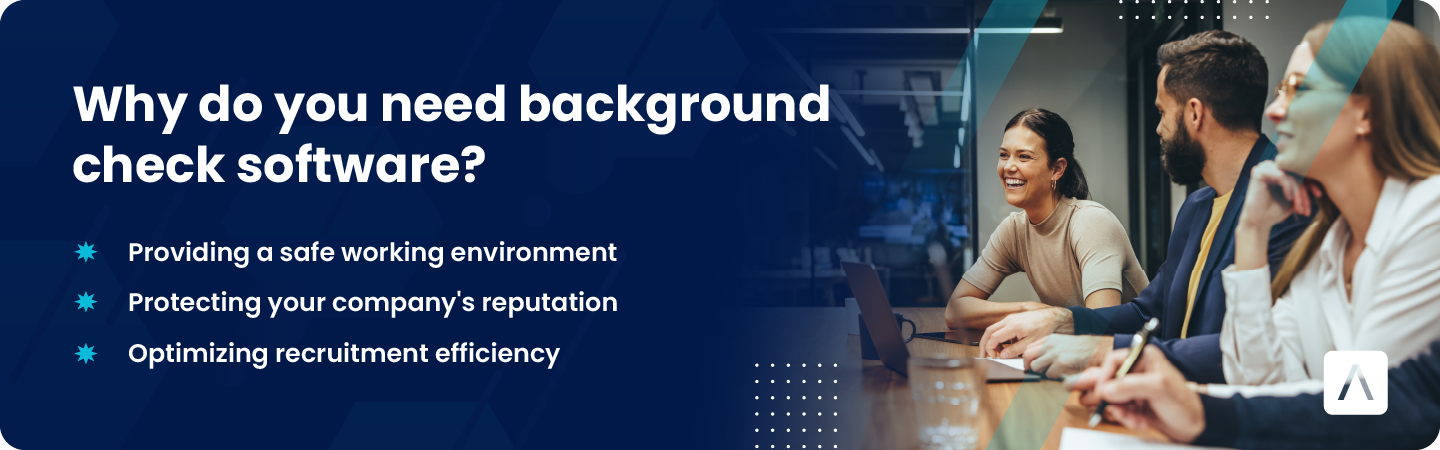
At their core, pre-employment background checks help employers make informed decisions with confidence. These background searches provide a clearer picture of who you’re bringing into the organization and help ensure your workplace stays safe, fair, and compliant. In some environments, this safety lens is especially critical. Roles that involve children, vulnerable populations, financial responsibility, driving, or access to sensitive systems often demand a higher level of diligence. A background check helps confirm that the person you’re trusting with that responsibility is truly qualified for it.
Screening also plays a key role in verification. When labor markets tighten, résumé inflation becomes more common. Background checks help validate:
- Education credentials
- Historial laboral
- Professional licenses or certifications
- Drug testing requirements, when applicable
While these background checks can be done manually through references or document review, background screening software brings structure and consistency to the process. It reduces back-and-forth, flags discrepancies early, and makes it easier to manage hiring at scale, especially when building or maintaining strong talent pipelines.
Just as importantly, background checks help mitigate risk. Consistent, well-documented screening demonstrates due diligence and can protect your organization from negligent hiring claims, regulatory scrutiny, or disputes down the line. It’s not just about what you find, it’s about being able to show how decisions were made.
Over time, this diligence saves both time and money. Avoiding a bad hire prevents the downstream costs of rehiring, retraining, lost productivity, and potential legal exposure. A solid screening process acts as a quiet safeguard, one that supports smarter decisions long after the offer letter is signed.
If you’re evaluating new software or rethinking your current approach, the right questions make all the difference. For a practical, side-by-side way to assess vendors and features, explore the Background Check Buyer’s Guide, which includes a definitive list of questions to consider before you choose a screening partner.
What Things Should You Include in Pre-Employment Background Searches?
Open roles create pressure, hiring managers want quick decisions, and candidates expect momentum. At the same time, you can’t afford shortcuts that introduce risk or compliance issues later. The key is focusing your background screening on the information that actually supports safe, defensible hiring decisions. Not every role needs every background check, but most organizations rely on a core set of screenings to build confidence without slowing the process.
Here’s where many teams start:
Criminal History
Criminal record checks are often the foundation of pre-employment screening. They help identify convictions or pending charges that may raise legitimate concerns about safety, trust, or role suitability. Context matters here. The nature of the offense, how long ago it occurred, and its relevance to the job all play a role. A thoughtful, compliant review helps employers balance fairness with workplace safety.
Employment History
Employment verification confirms that a candidate’s work history matches what they’ve shared. This typically includes job titles, dates of employment, and sometimes responsibilities. Misrepresentation is more common than many teams expect, especially in competitive markets, so verification helps ensure you’re hiring someone whose experience truly aligns with the role.
Education Verification
Education checks confirm degrees, certifications, or coursework required for the position. Even experienced candidates may have credentials that were never formally verified by previous employers. This step is especially important for roles where education is tied to regulatory, technical, or safety requirements.
Reference Checks
Speaking with former managers or colleagues can add valuable context around work style, communication, and reliability. Reference checks are most effective when they’re structured and consistent, and when contacts are independently verified rather than handpicked personal references.
Professional Licenses and Credentials
For regulated roles, license verification is essential. Healthcare providers, financial professionals, legal staff, and others must hold valid, active credentials to legally perform their jobs. Ongoing monitoring may also be necessary to ensure licenses remain in good standing after hire.
Driving Records
If a role involves driving on behalf of the organization, motor vehicle record checks help assess risk related to violations, suspensions, or patterns of unsafe behavior. For non-driving roles, this check is usually unnecessary and can be excluded to keep background searches focused.
As you can probably tell, the right mix of background checks depends on the role, the industry, and the jurisdictions involved. Just as important is how those checks are conducted. Compliance requirements, disclosure rules, and adverse action obligations can vary widely, and getting them wrong can create real exposure.
For a deeper look at how to stay compliant while screening effectively, read Best FCRA-Compliant Background Checks for 2026, where we break down evolving requirements and what HR teams should be looking for in a screening partner.
What Do You Need to Pay Attention To?
Background Check Compliance
This is the part you can’t afford to gloss over. Background checks are tightly regulated, and the Fair Credit Reporting Act (FCRA) sets clear rules for how information can be collected, used, and communicated to candidates. The right software should make compliance feel built-in, not bolted on. That means proper disclosures, consent tracking, adverse action workflows, and documentation you can actually rely on if questions come up later. When your screening partner is truly FCRA compliant, it protects both your organization and the people you’re hiring.
It’s also worth remembering that compliance isn’t static. Requirements can vary by role, location, and even timing. What’s appropriate for a seasonal hire may look different from an executive role, and state or local rules can add another layer. Good background screening software adapts to those realities instead of forcing you into one rigid process.
Cost Considerations
Pricing is rarely as simple as it looks on the surface. Some vendors charge per report, others use subscriptions, and many offer tiered packages with different levels of service and automation. The key is understanding what you’re actually paying for. A lower sticker price can end up costing more if it leads to delays, manual work, or compliance gaps. Look for a solution that aligns with your hiring volume, growth plans, and risk tolerance, not just your short-term budget.
Seguridad
You’re asking candidates to trust you with some of their most sensitive personal information. That responsibility doesn’t end once the report is delivered. Strong background check software treats data security as foundational, with encryption, secure storage, role-based access, and clear retention policies. This isn’t just about avoiding breaches, it’s about maintaining candidate trust and protecting your organization from reputational and regulatory risk.
Together, these considerations help ensure your background screening process supports hiring decisions instead of complicating them. The right software should make it easier to stay compliant, control costs, and safeguard data, while letting your team focus on hiring the right people with confidence.
5 Key Features to Consider in Background Check Software
Whatever triggered your search, it helps to slow down and focus on a few practical considerations that will matter long after the contract is signed:
- Speed-to-hire without sacrificing confidence – Everyone wants screening to move faster, but speed and reducing time-to-fill only matters if the results are accurate and defensible. Look for software that automates the right steps, things like candidate invitations, status updates, and adjudication workflows, so background checks don’t become the bottleneck. The goal isn’t to rush decisions, it’s to remove the unnecessary waiting, follow-ups, and manual work that slow hiring down.
- Integration with the tools you already rely on – Background searches work best when they’re not treated as a separate system. Software that integrates cleanly with your ATS and HRIS reduces duplicate data entry, cuts down on errors, and keeps recruiters from bouncing between platforms to find answers. When screening is embedded into your existing workflow, teams stay aligned and candidates experience fewer delays.
- Designed to scale as hiring changes – What works for today’s hiring volume may not work six months from now. Growing organizations should look for features like automated workflows, bulk ordering, role-based packages, and configurable rules by location or job type. These capabilities don’t just support growth, they prevent the need to rip and replace systems later when complexity increases.
- Reliable speed and accuracy you can trust – Fast turnaround times matter, but not if they come at the expense of data quality or compliance. The strongest background screening platforms balance speed with human review, clear sourcing, and audit-ready documentation. This gives HR teams confidence that hiring decisions will hold up under scrutiny, whether from leadership, regulators, or candidates themselves.
- A strong screening ecosystem behind the scenes – Background screening is rarely a single search. A robust platform should connect seamlessly with criminal record sources, employment and education verification services, drug testing labs, and identity verification tools. The strength of these connections directly affects turnaround times, consistency, and report quality.
Because every organization’s needs are different, it’s worth involving your HR team and hiring stakeholders in the evaluation process. Clarifying what problems you’re trying to solve, whether it’s speed, compliance, scale, or candidate experience, will make the decision much easier.
For a deeper, step-by-step breakdown of what to look for, including evaluation questions you can bring to vendors, the Background Check Buyer’s Guide is a helpful next read. If you want to see how these considerations come together in practice, Mitratech AssureHire is built to support compliant, scalable screening without slowing hiring down. You can also request a demo to see how AssureHire fits into your existing workflow and growth plans.

Ready for Background Screening That Actually Works for HR?
Pre-employment background checks carry a lot of weight. They affect hiring speed, compliance risk, candidate trust, and ultimately the quality of every hire you make. That’s why the software behind those checks matters just as much as the checks themselves.
Mitratech AssureHire is built to support HR teams who need screening to move quickly and stand up to scrutiny. From FCRA-aligned workflows and audit-ready documentation to seamless ATS and HRIS integrations, AssureHire helps reduce manual work, shorten turnaround times, and give recruiters and compliance teams confidence at every step. Candidates experience a clear, mobile-friendly process, while HR gains consistency, transparency, and control.
If you’re ready to simplify screening, reduce risk, and keep hiring momentum strong, we’d love to show you how AssureHire fits into your existing workflows.
Request a demo today to see how smarter background screening can support faster, more confident hiring.
Choosing the Best Software for Background Searches FAQs
What features should background check software include for HR teams today?
The most effective background check software does more than return reports. The HR teams we work with look for tools that support the full hiring workflow, from consent to decision to documentation. Core features typically include: automated candidate invitations, built-in FCRA disclosures and consent tracking, configurable screening packages by role or location, clear status visibility for recruiters, and audit-ready records. Strong platforms also support adverse action workflows and integrate smoothly with ATS and HRIS systems so screening doesn’t live in a silo.
How does background check software help with FCRA compliance?
Good software doesn’t ask HR to memorize regulations or manage compliance manually. Instead, it guides the process. This includes presenting the correct disclosures, capturing consent, enforcing waiting periods, and documenting adverse action steps in the proper order. When compliance is built into the workflow, teams spend less time double-checking steps and more time focusing on hiring decisions, with the confidence that documentation will hold up if questions arise later.
Can background check software really improve time to hire?
Yes, when it’s designed well. The biggest delays usually come from manual handoffs, incomplete candidate information, or waiting on updates. Software speeds things up by automating invitations, tracking progress in real time, flagging missing items early, and eliminating duplicate data entry. The result isn’t rushed decisions, but fewer stalls that cause candidates to disengage or accept other offers.
How important are integrations with ATS and HRIS platforms?
For most HR teams, integrations are essential. When background check software connects directly to your ATS or HRIS, candidate data flows automatically, recruiters don’t have to re-enter information, and everyone sees the same status updates. This reduces errors, saves time, and creates a more consistent experience for candidates and hiring managers alike. It also makes scaling hiring much easier as volume increases.
What should small or growing teams look for in background check software?
Good question! Smaller teams often need flexibility and simplicity without sacrificing compliance. This usually means easy setup, role-based screening packages, predictable pricing, and support that doesn’t disappear after onboarding. Growing organizations should also think ahead and look for automation, bulk ordering, and configurable rules that will support new locations, new roles, or higher hiring volume without needing to switch systems later.
How do background check platforms handle different roles and risk levels?
As I described above, not every role requires the same level of screening, and good software reflects that. HR teams should be able to tailor checks by job type, location, or risk profile. For example, a healthcare role may require license verification and sanctions checks, while a driving role needs motor vehicle records. Flexible configuration helps keep screening focused, compliant, and efficient.
What kind of reporting and visibility should HR expect?
Modern HR teams expect transparency. Background check software should provide clear dashboards showing where candidates are in the process, what’s complete, and what’s pending. It should also allow HR and compliance teams to pull reports or audit trails without chasing emails or spreadsheets. This visibility makes it easier to answer questions from leadership, regulators, or candidates themselves.
How does background check software support candidate experience?
Candidate experience often comes down to clarity and momentum. Software helps by offering mobile-friendly consent flows, plain-language disclosures, status updates, and fewer delays. When candidates understand what’s happening and why, they’re less likely to drop off or feel frustrated, even when checks take time.
How do I know if a background check provider is reliable?
Look beyond marketing claims. Reliable providers are transparent about their data sources, accredited where appropriate, and willing to explain how their processes work. Ask about turnaround times, quality controls, human review, and support availability. A provider that treats screening as a partnership rather than a transaction is usually a better long-term fit.
Where can I find a checklist of questions to compare vendors?
If you’re actively evaluating options, the Background Check Buyer’s Guide is a strong next step. It walks through the exact questions HR teams ask when comparing software, covering compliance, integrations, scalability, security, and support, so you can assess vendors side by side with confidence.
If you’d like to see how these features come together in practice, Mitratech AssureHire is designed to support compliant, scalable background screening without slowing hiring down. You can also request a demo to see how AssureHire fits into your current workflow and hiring goals.