
“Reframing compliance training as a net positive empowers your team and fosters a culture where compliance is a facilitator of innovation.” - Madeline Reigh, PMP, RIMS-CRMP, Director of Enterprise Risk Managment at Mitratech
Beyond meeting regulatory requirements, compliance training for employees builds work environments where ethical choices are understood and valued.
In a KnowBe4 State of Employee Compliance Training Report, nearly half of the respondents identified user engagement as the biggest challenge in delivering compliance training to their organizations. Luckily, there are many methods to keep compliance training for employees engaging with thoughtful design, relevant compliance topics, and consistent tracking progress that shows what works.
Die Rolle des Engagements bei der Schulung von Mitarbeitern zur Einhaltung von Vorschriften
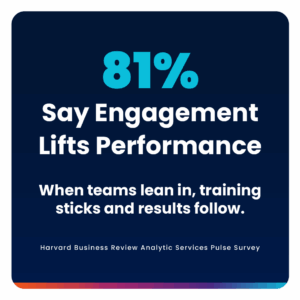 Engaged learners retain more and apply it faster. According to a Harvard Business Review survey, 81% of respondents strongly agree that highly engaged employees perform better. When employees participate actively, they understand regulatory obligations, reduce human error, and make better decisions. That translates to fewer incidents, lower risk of legal exposure, and a culture of accountability.
However, when employees find training boring or irrelevant, they are less likely to absorb crucial information, leading to non-compliance and potential legal issues. Insufficient training may result in noncompliance, underreporting of workplace issues, and reputational harm. Make every minute count with targeted content that is role based and practical.
6 Key Strategies To Increase Employee Engagement with Compliance Training
Um Mitarbeiter für Compliance-Schulungen zu begeistern, bedarf es innovativer Ansätze, die ihre Aufmerksamkeit erregen und ihr Interesse aufrechterhalten. Von der Einbeziehung interaktiver Elemente bis hin zu szenariobasierten Schulungen sorgen diese Strategien dafür, dass die Schulungen nicht nur effektiv, sondern auch fesselnd sind.
-
Entwicklung anpassbarer E-Learning-Module
Customizable e-learning modules provide the flexibility to tailor content to specific organizational needs and employee roles. This personalized approach ensures that training remains relevant and engaging for all participants.
Personalize by role and risk. Use microlearning, short videos, and quick checks to educate employees without disrupting work. Clear goals and visible progress motivate learners and improve course completion.
-
Szenariobasiertes Lernen nutzen
By immersing employees in realistic scenarios, this method allows them to apply compliance principles in practical, meaningful ways. According to Ohio State University, some of the main benefits of scenario-based learning include:
- Authentische Erzählungen und Situationen: Verwendet Szenarien aus dem wirklichen Leben, um Schlüsselfragen oder Probleme zu formulieren.
- Kritisches Denken und Problemlösungsfähigkeit: Fördert die Analyse und Entscheidungsfindung in risikoarmen Umgebungen.
- Flexibler Zeitaufwand: Kann von kurzen Aufgaben (5-10 Minuten) bis zu längeren Aktivitäten (30 Minuten bis eine Stunde) variieren.
- Verbesserter Zugang und Integration: Geeignet für unterschiedliche Lernpräferenzen und kann asynchron oder synchron, einzeln oder in Gruppen durchgeführt werden.
Rotate scenarios across data security, anti-harassment training, anti-bribery, and workplace safety training so employees see consequences and best actions.
-
Kulturell bewusste Inhalte erstellen

Recognizing and respecting cultural differences ensures that training is effective and respectful, fostering a more inclusive workplace.
This not only enhances engagement but also builds trust and cohesion within the team, making compliance training more impactful.
As Madeline Reigh, PMP, RIMS-CRMP, Director of ERM at Mitratech, advises, “Know your audience and tailor your training to be relevant. Be culturally conscious; a comment that might seem silly in one country could be offensive in another.”
-
Implementierung von Gamification-Methoden
Gamification transforms compliance training into an engaging experience by incorporating elements like points, badges, and leaderboards. According to Forbes, 90% of sales directors reported a positive impact on sales and revenue from gamification. Imagine applying this powerful tool to compliance training: it could significantly boost participation, enhance knowledge retention, and foster a culture of compliance throughout the organization.
-
Interaktive Elemente einbinden
Eine weitere Möglichkeit, das Engagement der Mitarbeiter bei Compliance-Schulungen zu fördern, ist die Einbeziehung interaktiver Elemente wie Quiz, Umfragen und Simulationen. Diese Aktivitäten regen zur aktiven Teilnahme an, geben sofortiges Feedback und helfen den Mitarbeitern, den Stoff in praktischen Szenarien anzuwenden, was zu einer besseren Mitarbeiterbindung und effektiven Compliance-Praktiken führt.
-
Schaffung einer risikobewussten Kultur
With a stronger, more risk-aware culture, organizations can ensure that compliance training is not just a mandatory task, but a vital part of the company’s ethos, promoting a safer and more compliant work environment.
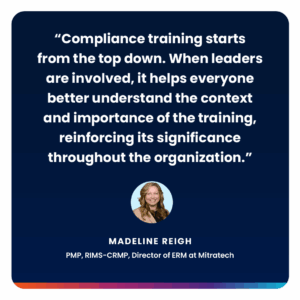
As Reigh aptly states, “Compliance training starts from the top down. When leaders are involved, it helps everyone better understand the context and importance of the training, reinforcing its significance throughout the organization.”
Um eine risikobewusste Kultur zu schaffen, ist es entscheidend, die Teilnahme auf allen Ebenen zu fördern. Führungskräfte sollten sich aktiv an der Schulung beteiligen, mit gutem Beispiel vorangehen und ihr Engagement für die Einhaltung der Vorschriften demonstrieren. Diese Beteiligung hilft den Mitarbeitern, den Wert der Schulung und ihre Auswirkungen auf das Unternehmen zu erkennen.
Increase Course Completion By Reducing Friction
Remove barriers that derail learning.
- Short modules that fit the flow of work.
- Calendar holds and gentle reminders.
- Clear “why it matters” intros that educate employees on benefits.
Small usability wins produce large completion gains.
What are effective workplace compliance solutions for better decision making?
Pair scenarios with microlearning to teach choice-making under pressure. Use branching stories for data security, anti-harassment training, anti-bribery, and workplace safety training. Tie each choice to policy, legal requirements, and consequences to improve decisions across varied work environments.
How do you design engaging compliance training that people finish?
Keep modules under 10 minutes, add interactivity, and show progress. Gamify course completion with points and badges. Tracking progress with automated reminders raises completion and reduces human error.
What does transforming compliance training look like in practice?
Modern compliance programs shift to continuous learning. Blend video, quizzes, and industry specific scenarios. Map each course to risks and legal requirements to ensure compliance and prove impact during audits.
How do we keep training engaging, relevant and fresh all year?
Refresh by quarter. Rotate compliance topics by season, add cases from incident trends, and spotlight “what changed” for policy updates. Use performance data to retire stale content and prioritize what learners miss.
What are innovative compliance training methods that actually work?
Try scenario sprints, peer discussion cards, and mobile nudges. Interactive simulations for occupational safety and health and short phishing drills for data security keep learning practical.
What are the main types of compliance training to include?
Anchor your curriculum to risk, role, and regulation. Start with the essentials, then layer industry specific content.
- Workplace safety training aligned to occupational safety and health expectations and required OSHA training.
- Data security and privacy hygiene, including phishing awareness and secure handling of sensitive information.
- Anti-harassment training that builds respectful work environments and clear reporting paths.
- Anti-bribery and anti-corruption responsibilities for sales, procurement, and third-party engagement.
- Corporate compliance and code of conduct, conflicts of interest, records management, and speak-up culture.
- Industry specific modules for healthcare, finance, public sector, manufacturing, and technology.
- Manager pathways with coaching techniques, documentation standards, and escalation steps.
Tie each module to a clear outcome such as a control improvement, a reduction in human error, or a measurable decrease in incidents.
Die Zukunft der Compliance-Schulungen für Mitarbeiter
Keeping compliance training fresh and engaging is key to fostering a proactive and innovative workforce. When employees see the real-world payoff, they lean in. As Madeline Reigh notes, “when employees understand the benefits of compliance training and feel supported, they can innovate without constant worry about regulations.”
Use data to refine your compliance programs, rotate high-impact compliance topics, and align content to legal requirements. Keep scenario practice alive in areas like workplace safety training, data security, anti-harassment training, and anti-bribery so daily decisions improve and you ensure compliance.
Ready to strengthen outcomes and reduce risk? Speak with our compliance experts to review your current approach, identify quick wins, and map a plan to raise course completion and tracking progress across your organization.